ok, I don't have the patience to paraphrase what my friend wrote... so... (it's a novel, but he's extremely detail oriented). Honestly. I'm almost afraid to post this, lol.
-------------
Eric,
The frequency response of the Suhr has a low frequency roll off as a result of the transformer used that provides the line level output from the input section. In months past a talented amp builder I am friends with had disassembled his unit to find the part number of this transformer (which is not a Jensen, as I have seen speculated), and while the specifics escape me this low frequency roll off was even defined in the spec sheet of the part. I ran a full frequency sweep through my unit at both line level and amp level, and both response plots verify this. D/A and A/D conversion on the loop is provided by a Prism Orpheus. Line level cables are Vovox, amp level cables are Monster. The power amp used for the amp level load when the Suhr was used as designed between the amp and the cabinet is a Bryston 3B-ST which is rated at 120 watts per side at 8 ohms. The speaker cabinet used as the load is a Mesa Boogie 4x12 with a quad of 8 ohm Celestion Vintage 30's wired in Series Parallel. My multimeter measured the cumulative impedance of the speaker cabinet at 7.1 ohms.
Below is the frequency response of the Suhr Iso Line Out with a line level signal applied to the input. No through signal to the load was sent, and the output on the pot is at 10 (open) to prevent any skew there. The return signal went straight back to the input of the Orpheus, so there is no mic preamp coloration or frequency response deviation.
+++(graph1)
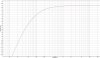
The below plot was used between the Bryston and Mesa (and speaker level cables to the Suhr and then to the cab), as the unit is designed for, and the returned frequency response is almost identical. Again, the pot was set to 10 and returned directly back into the Orpheus.
+++(graph2)

If you then take the plot of the line signal and use it as the reference response, then plot the amp level signal against it, the deviation of the power amp and speaker cables compared to the line level cables is drastically less than the deviation incurred by use of a (or perhaps, just this) signal tap by way of the transformer used.
+++(graph3)

This deviation is also primarily in the inaudible and unusable frequency range for electric guitar amps, and could be considered negligible. This deviation may not even be caused by the amps and cables, but the unit itself when used with different connections, however I am currently not able to devote more time to this to look into it further.
Case in point USING THE ABOVE TEST DATA:
When using quality and/or appropriate source materials, the requirement for this type of response alteration may in fact, depending on the equipment used, be causing MORE of a deviation from the natural response of the sampled system than what would have been if quality and/or appropriate source materials were used from the start. Again, using the above test data as a reference for the following statement, the primary advantage to this response alteration process would then be to compensate for inappropriate or low quality source materials, such as a guitar power amp or cheap solid state power amp to counteract the non flat signal transmitted as the stimulus.
Additionally, this process in general falls more in line with "simulation" of a guitar cabinet than practical recording. If a high quality solid state amplifier, reference microphone, and transformerless flat response microphone amplifier were used, yes, this process could be deemed highly advantageous for accurate measurement data. That said, most mic'ing up a guitar cabinet are using tube amps, and SM57/R121, and transformer based "colored" mic preamps. The deviation from flat response in the typical mics and preamps make the pedantic point of this process being more accurate null and void when using high quality and/or appropriate equipment, and again support the fact that this feature is primarily intended for compensating the use of improper equipment from the onset. This is not a negative thing, but a positive one, however it would seem this point has been lost amongst those debating it from a purely speculative and theoretical standpoint, less those that have actually done things like the above tests themselves and collected measurement data.
In summary:
The device used as the signal tap between the amp and the load that converts amp level signal to line level signal to create the "reference" measurement of the power amp frequency response in which the inverse is applied the cab capture has the possibility of deviating further from a flat frequency response than the equipment (power amp and cables) that they are trying to negate with this process. This process is fantastic for potentially flattening the response of a tube guitar amp or a cheap solid state power amp that may deviate even further or in different areas of the frequency response, but it is no way better than using super high quality, ruler flat reference amplifiers from the onset. I realize that is not an option for everyone, and this process offers a usable work around for those without said ideal equipment, but is not necessary for those who are or who's aim is not simulation with a full reference type equipment chain (amp, mic, preamp, environment).


 Apparently he has plots and all to back it up.


