You seem completely unbothered by hot chicks in the crowd...?One of the key differences is distractions in a live environment.
How do you [...]
This tells me you play the gay scene!


You seem completely unbothered by hot chicks in the crowd...?One of the key differences is distractions in a live environment.
How do you [...]

Not really neurosis. My cousin is in a band. And one day ALL the bands equipment got stolen. They were older and realized it would be too much work to buy and set everything they spent the last 20 years setting up all over again and his career ended.I don't think your problem is the live environment; it's neurosis.
I'm not gay. Are you gay?You seem completely unbothered by hot chicks in the crowd...?
This tells me you play the gay scene!


Not really neurosis. My cousin is in a band. And one day ALL the bands equipment got stolen. They were older and realized it would be too much work to buy and set everything they spent the last 20 years setting up all over again and his career ended.
True. I just meant just because one masters a song and can perform it by muscle memory doesn’t mean it will stay sharp just by performing it once every concert. But you’re right at a concert you only get one take!So? What does that have to do with the differences between practicing vs. performing?

Do you really think muscle memory can be sustained and even improved on COMPLEX solos by playing them ONCE and only at concerts 3-4 x week? I believe the details and fine elements of the solos would deteroriate over time. You still need to fine tune and repeat each lick you've mastered through repetitive practice on a regular basis for muscle memory to remain sharp.

The thing with "muscle memory" is, that it comes quickly but doesn't stand under pressure - it's deceptive. That's the typical phenomena in a performance situation or the sentence that every teacher knows so well: "at home i did so well, why did i fuck up now?".Do you really think muscle memory can be sustained and even improved on COMPLEX solos by playing them ONCE and only at concerts 3-4 x week? I believe the details and fine elements of the solos would deteroriate over time. You still need to fine tune and repeat each lick you've mastered through repetitive practice on a regular basis for muscle memory to remain sharp.
This is excellent advice. I often learn a new Slash song then when I try to visualize myself playing it and the melody in my head and where my fingers are going (I try to SEE and HEAR it in my head without the guitar) , I start to fuck up at some point and develop anxiety because my mind is trying to remember the specific visual or notes and I'm stalling out. The song where the melody comes easier to me as well as me visualizing the notes are easier to play even after a layoff in practice for several days. This is why I believe visualization is so crucial to success as a guitarist as it is in every other industry. When I can't visualize it I pick up the guitar and start practicing again. But no matter how easily I play it with muscle memory if my mind is tired and I try to visualize it again later that night or the next the same brain fart happens. It's as if if there is so many notes it becomes virtually impossible to visualize and see yourself playing each one. How do you combat this under pressure environments when you can no longer visualize and distractions are everywhere?The thing with "muscle memory" is, that it comes quickly but doesn't stand under pressure - it's deceptive. That's the typical phenomena in a performance situation or the sentence that every teacher knows so well: "at home i did so well, why did i fuck up now?".
When you practice a piece you'll soon find, that muscle memory kicks in very fast - giving you the illusion of having mastered it. But in reality then is the time where you have to go back, break the piece apart to its atoms and learn it thoroughly.
Best thing to check if you "know" a piece is: Could you play it without the instrument - just visualizing it, seeing your fingers in t mind and hear the melody while imagining it in your head? Most people will find, that there's one or another segment where they have to grab the guitar and re-check the notes. These are the parts that will most likely fall apart in a pressure-situation. Practicing without instrument is highly underrated for that purpose. It's also called the "carpenter effect" where even imagining movements leads to activating muscle groups. This will also give it a higher sutainability and provide you with a long-term memory

See if you need to ask this question once you've practiced it 10,000 times. Not completely kidding.How do you combat this under pressure environments when you can no longer visualize and distractions are everywhere?

See if you need to ask this question once you've practiced it 10,000 times. Not completely kidding.
You have to practice in a way that gives you plenty of enough "headroom" when you're performing. Never perform at your performance limit. If you let's say have to perform the piece at 120bpm you should be able to do at least 10 consecutive flawless repeats at 130bpm at home. You have to "over-practice" a bit.How do you combat this under pressure environments when you can no longer visualize and distractions are everywhere?
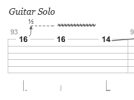
Yep. As as example of learning something, and practicing it a gazillion times, until it's so ingrained that you can play it right the very first time you go for it, (because that's what you need to be able to do, in a performance), I played this over and over and over....for as long as it takes, for everything to really settle in. There is no substitute for playing a solo a billion times until you get it ingrained into the brain and muscle memory.

Very good points indeed!You have to practice in a way that gives you plenty of enough "headroom" when you're performing. Never perform at your performance limit. If you let's say have to perform the piece at 120bpm you should be able to do at least 10 consecutive flawless repeats at 130bpm at home. You have to "over-practice" a bit.
Also the way you practice is crucial: when you practice you don't only practice the piece but also your environment and the situation. That's the problem with female singers for example - they practice at home with comfy clothes and get on stage with high heels and dress - and suddenly your body-feel is different. Same with guitar players: you practice sitting but perform standing. You practice with a cup of coffeee but the venue smells like beer.
Always try to bring yourself as close to the performance situation as possible so the body-feel doesn't change that drastically.
The opposite happens as well."at home i did so well, why did i fuck up now?".
That's why you bring a carpet!Always try to bring yourself as close to the performance situation as possible so the body-feel doesn't change that drastically.

...and a beerThat's why you bring a carpet!
!
...That's why you bring a carpet!
That's why my stage clothing is just my underwear and my fuzzy slippers. Added bonus: Nobody ever approaches me on stage to put their beer bottle on my amp when I'm in the middle of a complex solo. All the hot chicks dig it, too....and a beer


