
Seven2Eleven
Inspired
Hi everyone,
I've made a couple of posts lately ranting about how LLMs are often more trouble than their worth because of how they just get things factually wrong all the time. In those discussions, some users (specifically @biggness) suggested to try Notebook LM. With Notebook LM, you upload it some sort of source document and it uses that as the basis for any of your queries. I was told it was highly technical and presumably more reliable since it was limited in scope.
So in wanting to keep an open mind, I gave it a try. I first experimented with just the FM9 manual as a source and tried to ask it how to do things on the FM9 that I knew weren't possible but I wanted to see if the LLM would just BS an answer. I asked it to build me a rig that runs 3 amps in parallel. To my surprise, it was remarkably coherent. It said upfront that the FM9 doesn't allow for 3 amp blocks but there are workarounds. It did say one thing that was slightly dubious though. See here: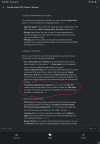
Either way, it made me want to try some more things. What I thought would be interesting would be to use two sources and try to see how it connects the information from the two. I use the app Bandhelper with my FM9 so I made some PDFs from Bandhelper's tutorials on their website and uploaded that into Notebook LM.
This time, I asked it to help do something that I knew was possible and that I more or less knew how to do already. My prompt was "I want set up a command in band helper to control the shift knob in the virtual capo block"
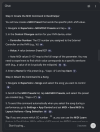
To my surprise, it synthesized the info from both sources and gave some pretty clear steps. See the screenshots here:
The best part came after when I asked it how can I calculate semitone values for the shift knob?

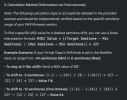
I tested this formula out and it works perfectly! This really impressed me and I can see some utility in this.
However, I still have my reservations about LLMs. Like I said earlier, this was something that I more or less knew how to do already. So I was in a position to fact check and see if it made any glaring errors. For a total novice who doesn't know anything about MIDI, or guitar amp modeling in general, I would fear that they wouldn't know when it makes a mistake, which it's bound to do.
Anyway, I wanted to share an AI success after me ranting about them
I've made a couple of posts lately ranting about how LLMs are often more trouble than their worth because of how they just get things factually wrong all the time. In those discussions, some users (specifically @biggness) suggested to try Notebook LM. With Notebook LM, you upload it some sort of source document and it uses that as the basis for any of your queries. I was told it was highly technical and presumably more reliable since it was limited in scope.
So in wanting to keep an open mind, I gave it a try. I first experimented with just the FM9 manual as a source and tried to ask it how to do things on the FM9 that I knew weren't possible but I wanted to see if the LLM would just BS an answer. I asked it to build me a rig that runs 3 amps in parallel. To my surprise, it was remarkably coherent. It said upfront that the FM9 doesn't allow for 3 amp blocks but there are workarounds. It did say one thing that was slightly dubious though. See here:
Either way, it made me want to try some more things. What I thought would be interesting would be to use two sources and try to see how it connects the information from the two. I use the app Bandhelper with my FM9 so I made some PDFs from Bandhelper's tutorials on their website and uploaded that into Notebook LM.
This time, I asked it to help do something that I knew was possible and that I more or less knew how to do already. My prompt was "I want set up a command in band helper to control the shift knob in the virtual capo block"
To my surprise, it synthesized the info from both sources and gave some pretty clear steps. See the screenshots here:
The best part came after when I asked it how can I calculate semitone values for the shift knob?
I tested this formula out and it works perfectly! This really impressed me and I can see some utility in this.
However, I still have my reservations about LLMs. Like I said earlier, this was something that I more or less knew how to do already. So I was in a position to fact check and see if it made any glaring errors. For a total novice who doesn't know anything about MIDI, or guitar amp modeling in general, I would fear that they wouldn't know when it makes a mistake, which it's bound to do.
Anyway, I wanted to share an AI success after me ranting about them

